Factors That Affect Adhesive Performance
Materials
Factors That Affect Adhesive Performance
Understand how surface condition, pressure, time, temperature, moisture, backing choice, and converting quality influence adhesive performance.
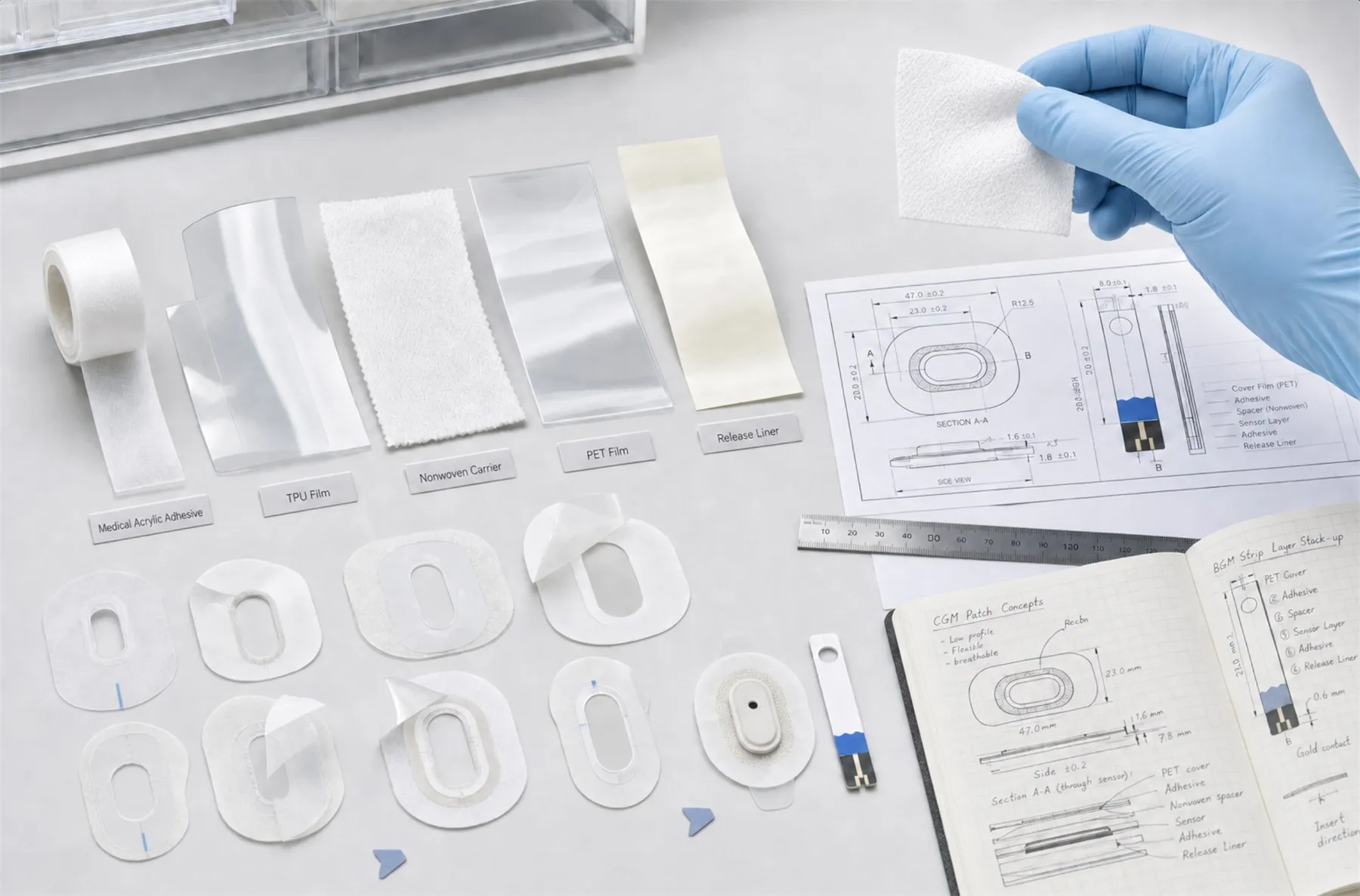
Adhesive performance is the result of material chemistry, surface preparation, application conditions, product geometry, and environmental exposure. Reviewing only a nominal peel value rarely predicts the complete device experience.
Surface and Application
Oils, moisture, texture, and low-surface-energy materials can reduce contact between adhesive and substrate. Application pressure and conformability help the adhesive wet the surface and develop a stable bond.
Environment and Use
Heat, cold, sweat, water exposure, repeated movement, and mechanical load can change adhesive behavior. Testing should reproduce realistic conditions rather than relying on room-temperature data alone.
Converted Geometry
Patch size, edge radius, cut quality, backing stiffness, liner design, and multilayer registration all contribute to real-world performance. Precision converting supports repeatability across production lots.
Engineering Review
Key points to define for the project.
Related Resources
Continue exploring materials.
Engineering Support
Discuss your application with Leetoya.
Share drawings, material requirements, target performance, validation stage, and annual volume for an engineering review.