How to Select Medical Adhesives for Wearable Devices
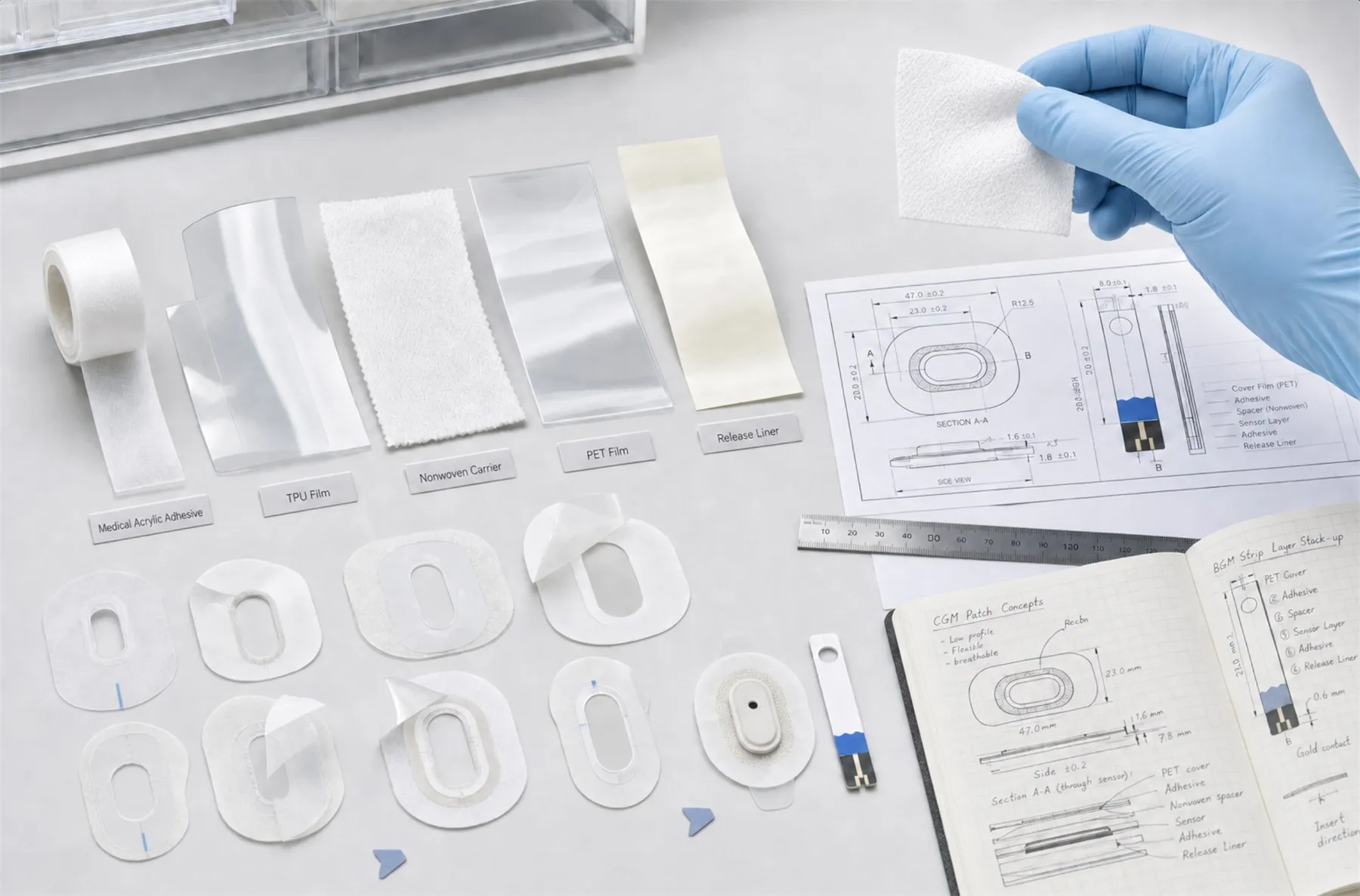
Materials
How to Select Medical Adhesives for Wearable Devices
A structured approach to selecting skin-contact adhesives around wear duration, skin sensitivity, device weight, moisture, and manufacturing requirements.
Adhesive selection for a wearable medical device is an engineering decision involving the user, the device, the application method, and the manufacturing route. A material that performs well in one body location or wear period may not suit another.
Start With the Use Case
Document intended wear time, body location, user population, movement, moisture exposure, device weight, and removal expectations. These requirements establish the performance window for material screening.
Compare Material Platforms
Acrylic adhesives often support durable wear and scalable processing. Silicone adhesives may offer gentler skin contact and removal. Hydrocolloid systems add moisture management for selected applications. Each option requires validation in the final construction.
Include Manufacturability
Material availability, liner stability, die-cut performance, lamination behavior, packaging, and automated application can affect the commercial result. Engineering review should balance user performance with process consistency and supply continuity.
Engineering Review
Key points to define for the project.
Related Resources
Continue exploring materials.
Engineering Support
Discuss your application with Leetoya.
Share drawings, material requirements, target performance, validation stage, and annual volume for an engineering review.