Flatbed Die Cutting
Precision converting for complex medical components.
Flexible converting for complex multilayer constructions, thicker materials, and engineering validation.
Complex Geometry & Flexible Development
Not every medical component is suited for high-speed rotary manufacturing.
Medical adhesive assemblies, diagnostics, wearables, and foam constructions may require complex contours, internal cutouts, thicker stacks, or frequent design changes. Flatbed die cutting provides greater flexibility and manufacturing control in these situations.
Leetoya converts medical tapes, foams, films, nonwovens, liners, hydrophilic films, and multilayer laminates into precision components for medical-device and functional applications.
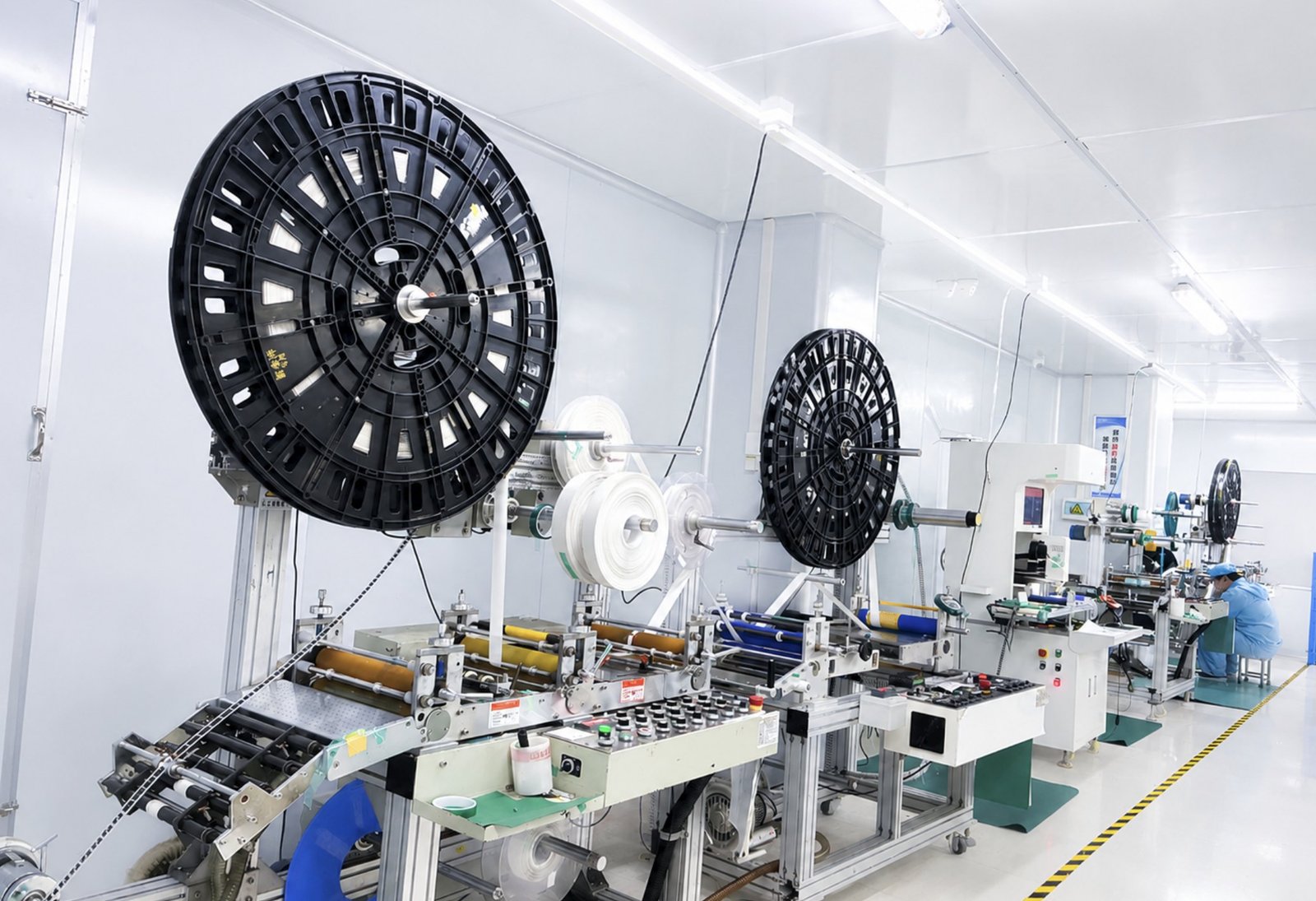
Process Comparison
Flatbed Die Cutting vs. Rotary Die Cutting
Compare the strengths of flatbed and rotary converting based on part geometry, material construction, production volume, and design maturity.
Intricate contours, internal windows, cutouts, and custom geometries
Optimized for repeatable production designs
Thick foams, multilayer laminates, and complex stack-ups
Thin, flexible roll materials for continuous processing
Easily accommodates engineering revisions and custom development
Best suited for stable, validated product designs
Prototype, validation, pilot, and medium-volume production
Medium- to high-volume commercial manufacturing
High flexibility for evolving projects and material changes
Optimized for continuous long-run production
Precision-focused converting with maximum design flexibility
Maximum throughput, repeatability, and cost efficiency
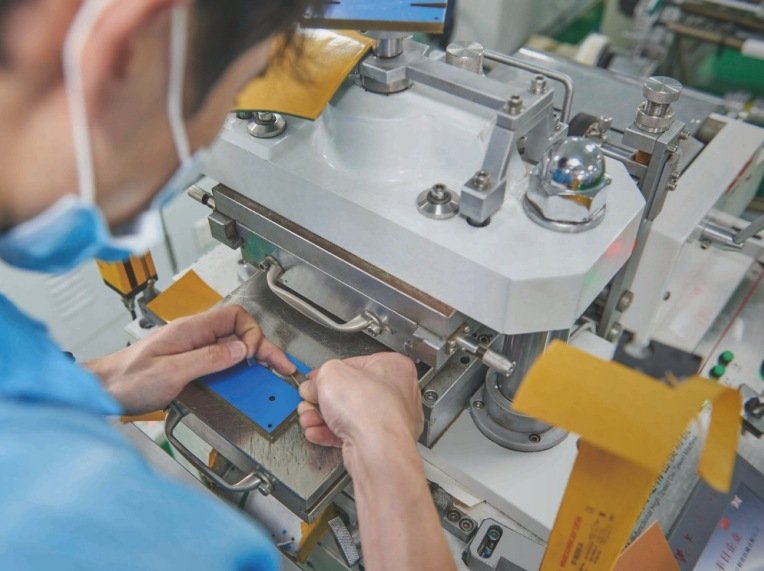
Prototype to Commercial Scale
Develop with flatbed, then scale with rotary.
Many medical products begin with flatbed die cutting during prototype development, engineering validation, and pilot production. Once the design is finalized and commercial volumes increase, the project can transition to rotary die cutting for higher throughput and lower cost per part.
Rapid Development Evaluate complex geometries, multilayer constructions, and material combinations before production tooling.
Engineering Validation Verify dimensions, registration, assembly performance, and critical functional features.
Production Transfer Transition validated designs to rotary die cutting when commercial volume justifies higher production efficiency.
Frequently Asked Questions
Flatbed die-cutting questions.
What materials are suitable for flatbed die cutting?
Medical tapes, acrylic and silicone adhesives, foams, TPU, nonwovens, liners, hydrophilic films, mesh, laminates, and other engineered materials.
Is flatbed more precise than rotary?
Both can achieve excellent accuracy. Flatbed is often preferred for complex geometry, internal windows, thick materials, and validation projects.
Can flatbed support multilayer constructions?
Yes. It is frequently combined with laminating for medical, wearable, diagnostic, cushioning, and engineered assemblies.
Can projects move from flatbed to rotary production?
Yes. This is a common pathway once the design is finalized and volume increases.
Can flatbed support medical-device applications?
Yes. Applications include CGM patches, BGM materials, diagnostics, wearables, foams, fixation products, and other complex medical components.
Complex Component Review
Evaluate geometry and stack construction together.
Share the drawing, material layers, thicknesses, tolerance, liner design, validation stage, and volume target.