Tool-Free Manufacturing
Produce components directly from digital drawings without physical tooling. Design changes can be implemented immediately, eliminating tooling lead time, wear, maintenance, and replacement.
Precision Laser Cutting
Digital manufacturing for prototype evaluation, design revisions, and complex geometries before commercial-scale die cutting.
Non-Contact Digital Manufacturing
Precision laser cutting uses a high-energy beam to cut materials without mechanical contact. Compared with traditional tooling, it supports fast processing, high accuracy, minimal tool-related damage, and immediate drawing updates.
The process is especially suitable for rapid iteration, customized development, complex contours, and selected medical, electronic, diagnostic, and functional materials.
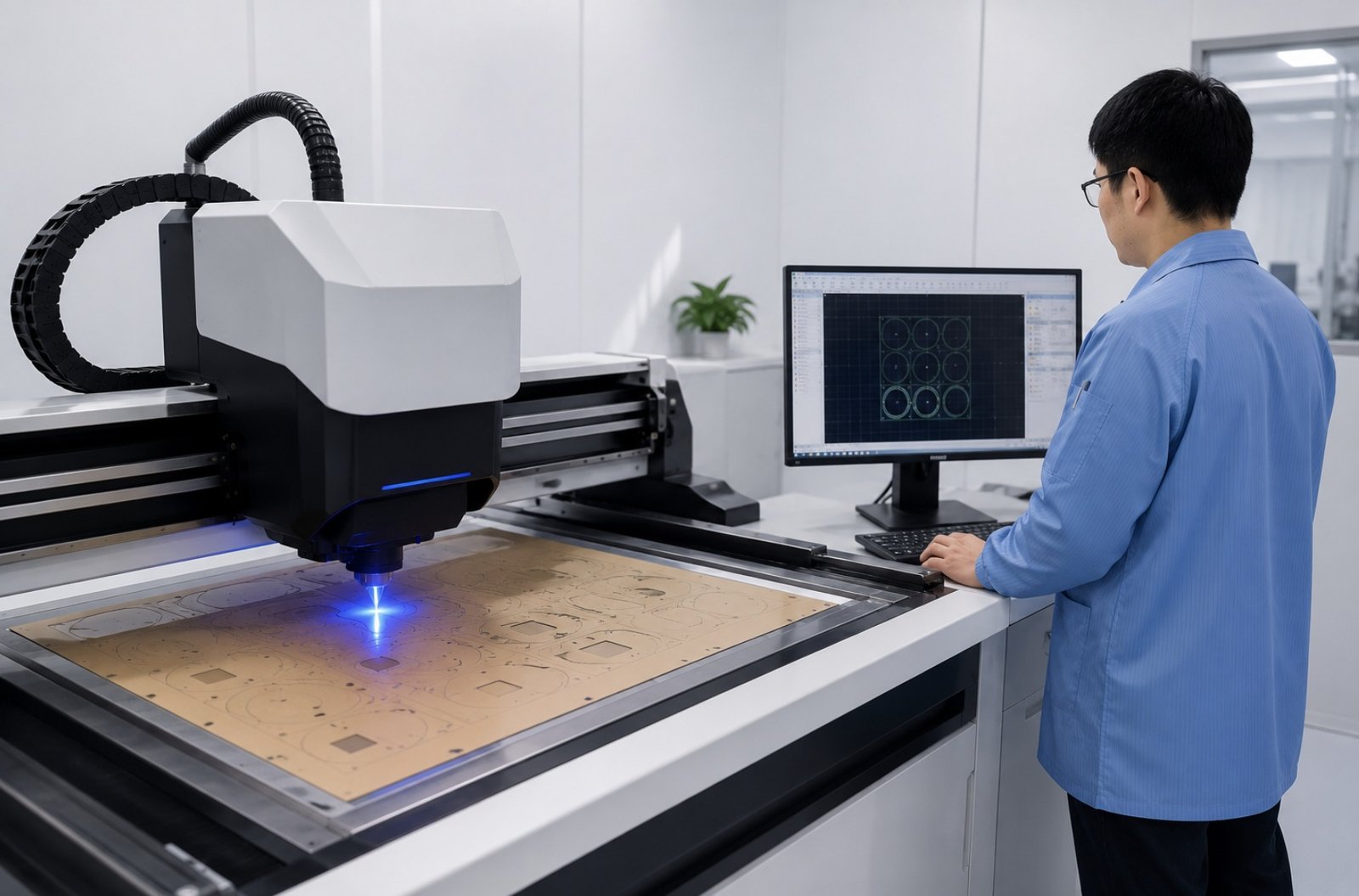
Why Precision Laser Cutting
Produce components directly from digital drawings without physical tooling. Design changes can be implemented immediately, eliminating tooling lead time, wear, maintenance, and replacement.
Create intricate contours, internal openings, narrow features, sharp corners, and highly customized geometries that are difficult to achieve with conventional die cutting.
Produce precision holes, fine patterns, detailed cutouts, and miniature features for medical devices, diagnostics, electronics, and advanced functional materials.
Laser processing minimizes mechanical stress, deformation, and material damage by eliminating physical contact during cutting, making it ideal for delicate and sensitive materials.
Accelerate engineering validation with fast prototype production before committing to production tooling.
Support prototype verification, design optimization, and manufacturing evaluation before transferring projects to commercial production.
Process Comparison
Prototype to low-volume production
Medium- to high-volume production
No tooling investment for prototypes and low-volume production
Lowest cost per part at commercial volumes
Frequently Asked Questions
No tooling, faster design changes, complex geometry, and micro-feature capability make laser cutting suitable for rapid and lower-volume work.
Yes. It supports precision holes, narrow channels, intricate contours, and fine patterns.
Selected medical tapes, films, foams, nonwovens, mesh, laminates, plastics, insulation materials, and specialty substrates.
Yes. It is used for medical adhesives, wearables, diagnostics, biosensors, and other precision healthcare components.
Once the design is stable and production volume increases, rotary or flatbed tooling can become more economical.
Rapid Engineering Review
Share the CAD file, material, thickness, tolerances, feature sizes, quantity, and intended production route.