How Hydrophilic Films Improve Fluid Flow
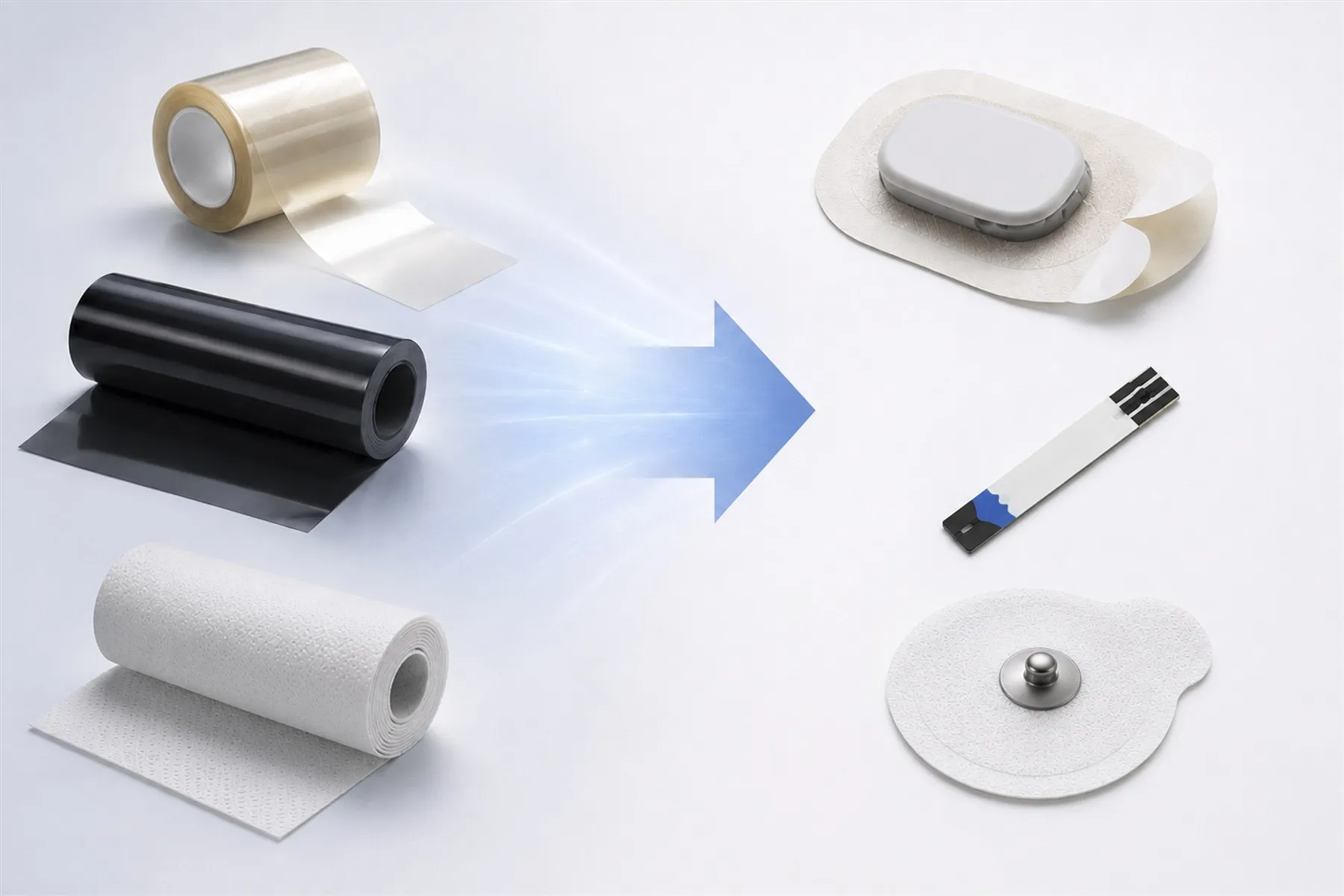
Medical Devices
How Hydrophilic Films Improve Fluid Flow
Understand how hydrophilic surface properties support wetting and capillary transport in BGM strips, microfluidics, and point-of-care diagnostics.
Hydrophilic films are designed to promote wetting, helping aqueous samples spread and move through small channels. In diagnostic devices, this behavior can support faster filling and more predictable sample transport.
Wetting and Capillary Action
A hydrophilic surface reduces resistance to wetting compared with an untreated hydrophobic film. Combined with a narrow channel, it helps draw fluid toward the reaction or detection area.
Film Construction
Hydrophilic behavior may come from a coating or a modified surface. Base-film thickness, optical properties, coating uniformity, adhesion, and compatibility with adjacent layers all affect the final assembly.
Converting and Validation
Slitting, die cutting, laminating, and handling should avoid damaging the functional surface. Customers typically validate fill time, aging behavior, storage conditions, and performance with the complete device design.
Engineering Review
Key points to define for the project.
Related Resources
Continue exploring medical devices.
Engineering Support
Discuss your application with Leetoya.
Share drawings, material requirements, target performance, validation stage, and annual volume for an engineering review.